
One model. Six years to a career.
Every student deserves a competitive, no-cost college degree and a clear path to a career.
The Pathways in Technology Early College High School model (P-TECH) makes college affordable by design: students graduate with a high school diploma, an associate degree at no cost to their families, and real workplace experience — all in one seamless pathway.
Where P-TECH is now
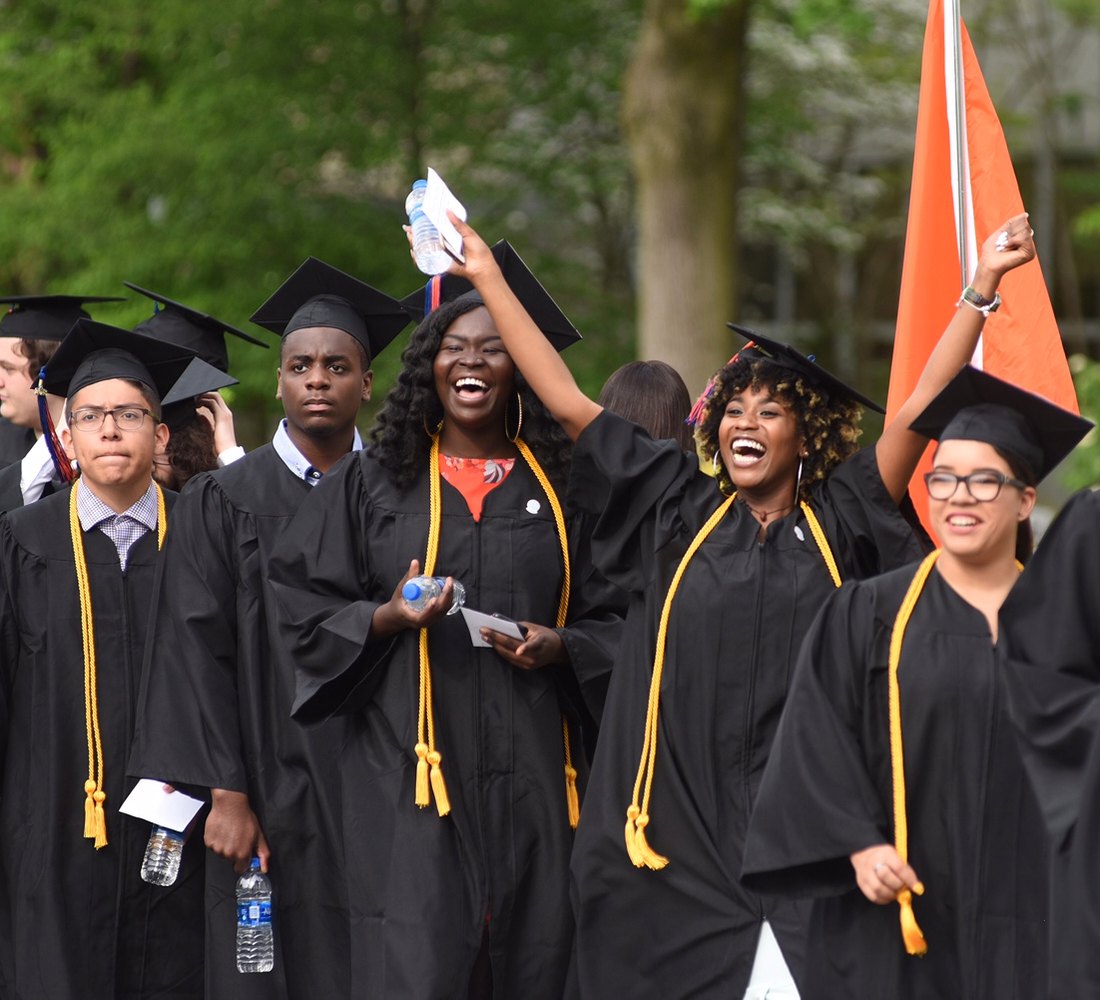
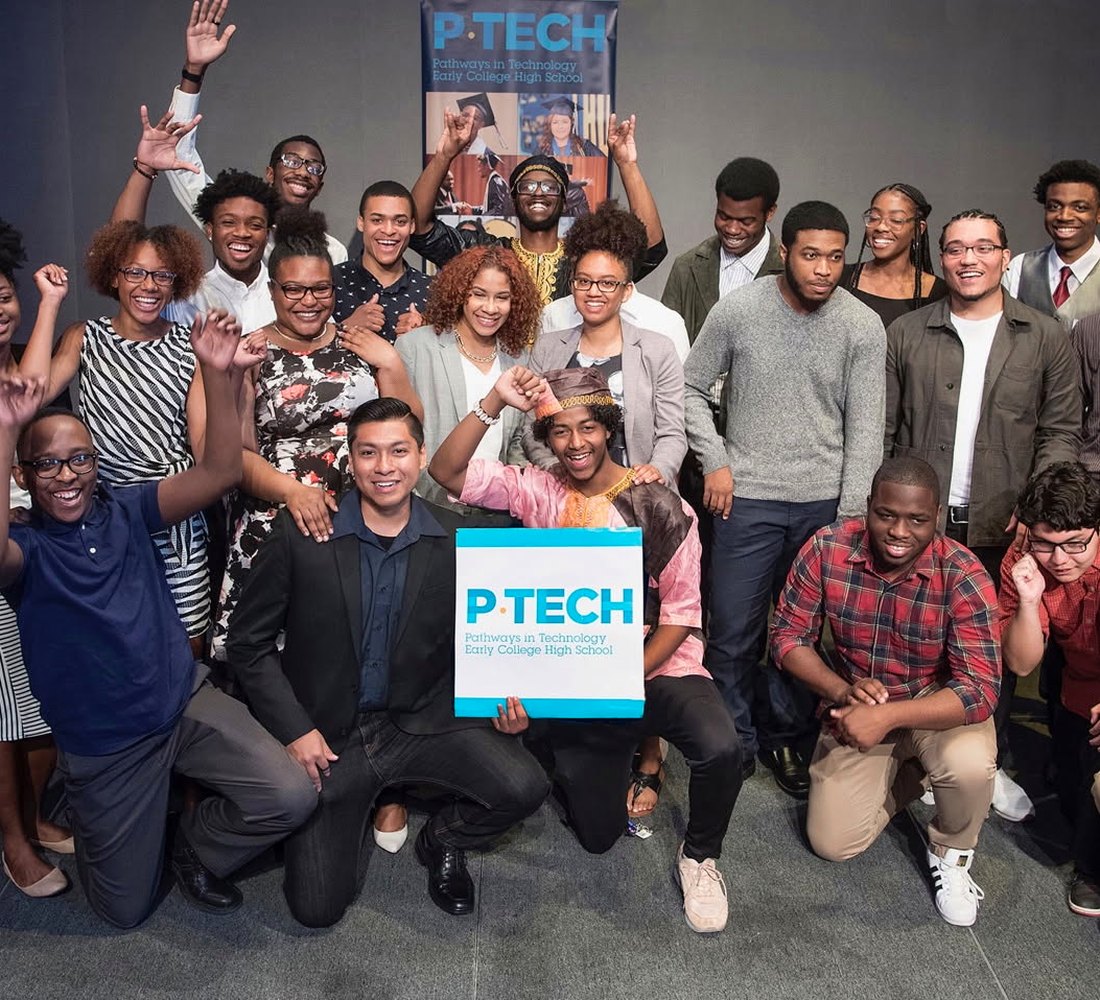
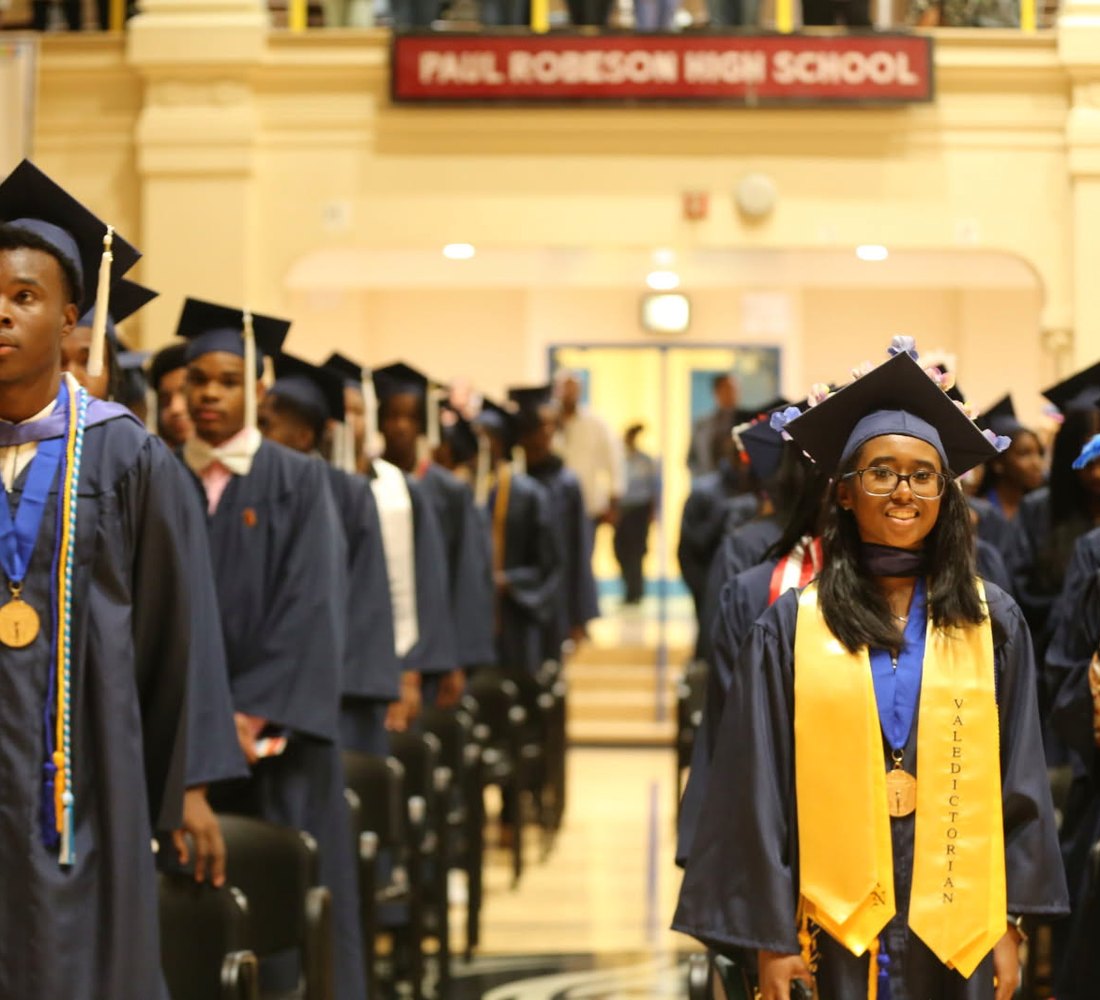
The model has spread from a single Brooklyn classroom to schools across 11 U.S. states and 28 countries.
The Alliance works alongside states, districts, community colleges, and employers to launch new schools and strengthen the ones already running.
Read our historyP-TECH across the United States
Highlighted states have P-TECH schools operating today.
One connected path, grades 9–14
Open to any student — no admission test, no cost for college — combining high school, an associate degree, and workplace experience.
High school + college
Students begin earning college credit in high school through aligned coursework, avoiding costly remedial college classes.
Industry partnership
Mentoring, worksite visits, and paid internships with employer partners throughout the pathway.
Degree + first in line for a job
Graduates finish with a competitive associate degree, debt-free, and first-in-line consideration for jobs.
P-TECH in the conversation

P-TECH and the AI economy
In Forbes, AI expert Paulo Carvão makes the case that P-TECH is the model for America's AI workforce transition — connecting education to jobs and economic growth.
Read in Forbes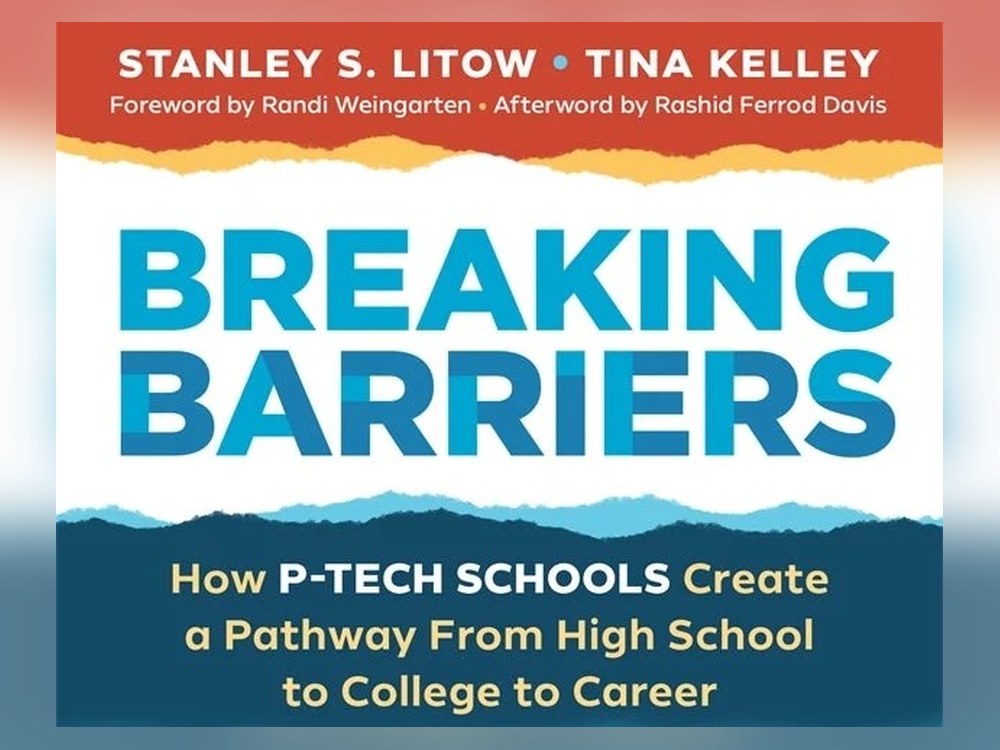
Breaking Barriers
Stan Litow and Tina Kelley tell the story of the school model rethinking the path from school to work.
About the book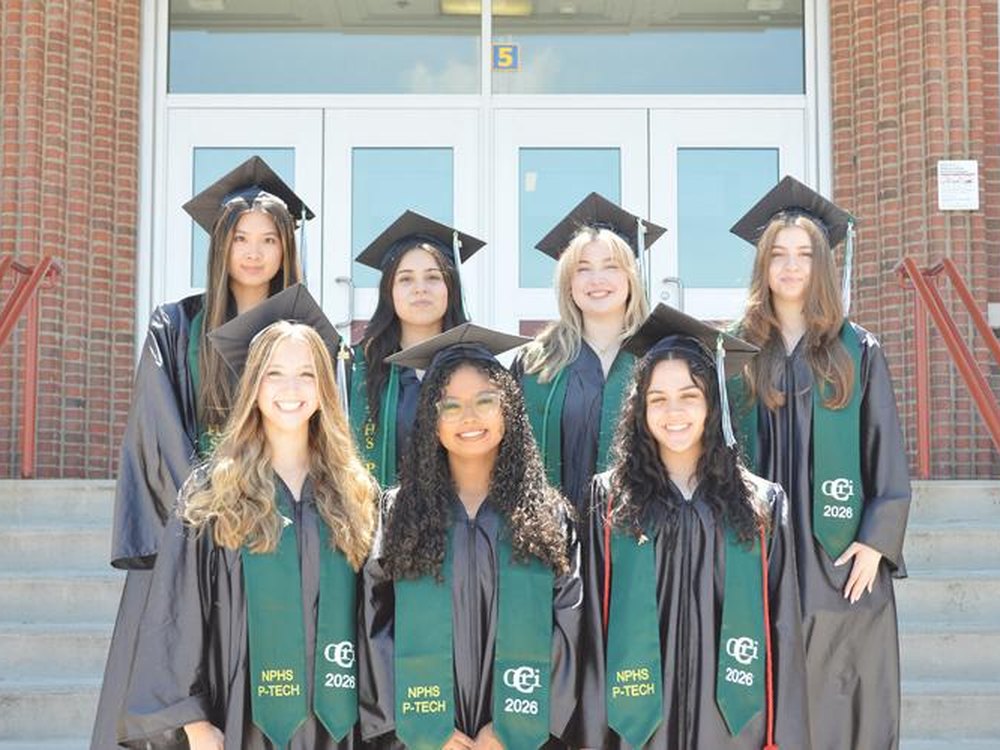
P-TECH students earn degrees before diplomas
Rhode Island high school seniors earn associate’s degrees from Community College of Rhode Island before their official high school graduation.
Read their storySign up for our newsletter
News from the network, research briefs, and stories from students six years ahead of the curve.
The P-TECH Alliance
The intermediary that strengthens, scales, and modernizes the P-TECH model — so every student can move from high school to a no-cost degree to a real career.
Strengthen, scale, and modernize
Accelerate the design, launch, improvement, and expansion of high-fidelity P-TECH programs nationwide and globally.
Our vision: every student with a seamless pathway from high school to degree to career.
The Alliance was entrusted with the P-TECH name and ptech.org by IBM, and is a registered 501(c)(3) nonprofit organization.
What others are writing about P-TECH
Connect education to jobs — and create an AI workforce transition plan
Harvard Senior Fellow and AI expert Paulo Carvão argues that P-TECH offers the proven framework for America's AI workforce transition, linking education, employers, and economic growth.
Read the articlePresident Obama spotlights P-TECH
The President pointed to the Brooklyn school as a national model in his address to Congress.
Read the addressThe school that is changing American education
Time's feature on how P-TECH rewires the path from ninth grade to a career.
Read the storyBreaking Barriers
The book behind the model, by P-TECH co-founder Stan Litow and Tina Kelley.
About the bookRecent coverage
New reporting on P-TECH and the college affordability conversation — added as stories publish.
Governance
Click any profile to read more.
 Board Chair
Stan Litow
Co-founder of P-TECH. Stan designed the grades 9–14 P-TECH model that opened in Brooklyn in 2011 and now spans the globe.
Co-author of Breaking Barriers, Stan Litow is a professor at Columbia University’s School of International and Public Affairs. He previously taught at Duke University, where he also served as Innovator in Residence.
Earlier in his career, he served as Deputy Schools Chancellor for New York City Public Schools, the largest K–12 system in the United States. He later joined IBM, where he served as president of the IBM Foundation and vice president in charge of global Corporate Social Responsibility and Corporate Affairs. Earlier, he was the Executive Director of the Urban Corps, and organized three national summits for presidents, governors, and business and education leaders. He served on several presidential and gubernatorial commissions.
He serves as a trustee of the State University of New York, the largest public postsecondary institution in the United States, where he chairs the Academic Affairs Committee. He serves on the board of the Albert Shanker Institute of the American Federation of Teachers.
 Board President
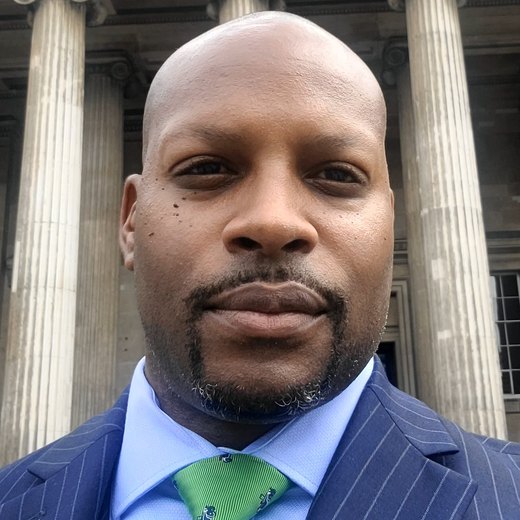
Diallo Shabazz
A non-profit executive, global education advisor, and sustainability expert, Diallo has worked across four continents to advance career-connected learning and the future of work.
Diallo Shabazz brings deep expertise in corporate engagement, multi-stakeholder management, and workforce development. He has advised the founding teams behind several models of social innovation that now serve as national and global standards for public-private partnership — among them IBM’s P-TECH model, the Brooklyn STEAM Center, the CUNY College of Labor and Urban Studies, New York City’s Apprenticeship Accelerator in the Office of the Mayor, and the George Lucas Museum of Narrative Art.
For the past six years he has led the New York P-TECH Leadership Council, providing policy advisement, program development, and technical assistance to SUNY colleges, the New York State Education Department, the Board of Regents, school districts, and the employer partners supporting more than fifty P-TECH schools statewide. Since 2020 he has led the expansion of New York P-TECH from 42 to 56 programs. His multi-stakeholder engagement strategy recruited Micron to launch the first P-TECH semiconductor manufacturing program and brought the New York Power Authority into partnership with schools on energy, cybersecurity, and hydroponics.
On the international stage, Diallo has advised government ministries across Europe, the Middle East, and Africa. He served as a fellow at the National Committee on U.S.-China Relations, and from 2011 to 2013 was appointed a North American Civil Society Representative to the United Nations Environment Programme, supporting ministerial-level meetings on the U.N.’s Post-2015 Agenda and the creation of the Sustainable Development Goals. He was a delegate to the UNECE Regional Meeting in Switzerland, the UNEP Governing Council Global Forum in Kenya, and the U.N. Sustainable Development Conference (Rio+20) in Brazil.
He previously served as Senior Director of Career and Technical Education at New York City Public Schools, leading a portfolio of 318 programs across 135 schools, and as Chief Administrator of the District Council 37 Education Fund — one of the largest municipal training funds in the country, serving 150,000 employees across more than 1,000 job titles — where he quadrupled annual revenue and digitized operations in his first two years. In 2015 he served on the New York State Board of Regents Blue Ribbon Committee that created the nation’s first statewide My Brother’s Keeper Initiative, securing $20M to improve education for boys and young men of color.
He began his career as Regional Director of the NAACP’s Youth & College Division for the northeast United States, and has served on board committees and advisory councils for the Metropolitan Museum of Art, the NAACP National Board of Directors, and the AI-education company Stemuli. He has been featured in Forbes and The New York Times, and lives in New York with his wife and two daughters.
 Board Member
Chris Caine
President of the Center for Global Enterprise and President & CEO of Mercator XXI, with more than 45 years of experience in government and public affairs across 65 countries.
Christopher G. Caine is President of the Center for Global Enterprise, a New York–based nonprofit dedicated to the study of the contemporary corporation in the era of global economic integration. He is also President and CEO of Mercator XXI, LLC, a professional services firm helping clients engage the global economy.
Prior to 2009, Mr. Caine spent 25 years at IBM, including thirteen years with corporate responsibility for global public policy as Vice President, Governmental Programs. He also served as IBM’s Director of Human Resources and Environmental Policy, with responsibility for health care reform, labor, health and safety, environment, and energy policy. Earlier, he worked for the Coca-Cola Company, the Eaton Corporation, and the Electronic Industries Association.
He has spoken before the United States Congress, the World Economic Forum, the World Knowledge Forum in Seoul, the Shanghai International Forum, the Congressional Black Caucus Foundation, and the Centre for Corporate Public Affairs in Sydney, among many others.
Mr. Caine serves as a senior adviser for technology and public policy to the Center for Strategic and International Studies and is a Fellow of the International Academy of Management. He sits on the boards of the Information Technology and Innovation Foundation, the Economic Club of Washington DC, the Institute for Education, the Ambassador Theater, and BrainFood. A guest lecturer at Lafayette College and Georgetown University, he created the Caine Scholar’s Award for Global Leadership, Business and Policy at Lafayette College in 2008.
Our team
Click any profile to read more.
Executive Director
Diallo Shabazz
Diallo leads the Alliance’s national strategy, state partnerships, corporate engagement, and global expansion.
A non-profit executive, global education advisor, and sustainability expert, Diallo has worked across four continents over two decades to advance career-connected learning, sustainable development, and the future of work. He has advised the founding teams behind IBM’s P-TECH model, the Brooklyn STEAM Center, the CUNY College of Labor and Urban Studies, and New York City’s Apprenticeship Accelerator.
For six years he led the New York P-TECH Leadership Council, supporting SUNY colleges, the State Education Department, the Board of Regents, districts, and employers across more than fifty P-TECH schools — growing the state network from 42 to 56 programs since 2020. He recruited Micron to launch the first P-TECH semiconductor manufacturing program and brought the New York Power Authority into school partnerships on energy, cybersecurity, and hydroponics.
Internationally, he has advised government ministries across Europe, the Middle East, and Africa, served as a fellow at the National Committee on U.S.-China Relations, and was appointed a North American Civil Society Representative to the United Nations Environment Programme, supporting the ministerial meetings that shaped the Sustainable Development Goals as a delegate in Switzerland, Kenya, and Brazil.
He also leads Braven Solutions, which has directed strategic planning for the New York Governor’s $80M Advanced Manufacturing training facility in Syracuse, advised the NYC Mayor’s Office on restructuring its $900M workforce development ecosystem, and managed the design of Fordham University’s Bronx Green Jobs Center, opening in Fall 2026.
Earlier he served as Senior Director of Career and Technical Education at New York City Public Schools, overseeing 318 programs across 135 schools, and as Chief Administrator of the DC 37 Education Fund, serving 150,000 employees across 1,000 job titles. He began his career as Regional Director of the NAACP’s Youth & College Division and has been featured in Forbes and The New York Times.
 Senior Director, Engagement & Communications
Tina Kelley
Tina leads the Alliance’s storytelling, communications, state strategy, and public engagement.
Co-author of Breaking Barriers, the book that tells the story of the P-TECH model, Tina brings a reporter’s standard for accuracy to the Alliance’s public voice.
She spent ten years as a reporter for The New York Times, where she contributed to the “Portraits of Grief” series, part of a staff Pulitzer Prize for Public Service. She is also the author of several collections of poetry and co-author of Almost Home, on youth homelessness.
She was a US@250 Fellow with New America, was senior education reporter at NJ.com/The Star-Ledger, and also worked at The Seattle Times, The Seattle Post-Intelligencer, and The Philadelphia Inquirer. Her articles have appeared in The Atlantic.com, The Christian Science Monitor, Audubon, Orion, People, The Progressive, and other publications. Her honors include a National Association of Black Journalists Salute to Excellence award, the Washington State Book Award, and the New Jersey Poets Prize.
At the Alliance she leads communications, press relations, and the organization’s state engagement work, including the Maryland partnership with the state Department of Education.
 Founding P-TECH Principal
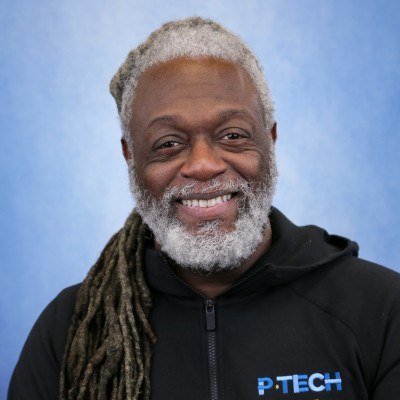
Rashid Davis
Rashid is the Founding Principal of the P-TECH model, award-winning mentor of new school administrators, and “The Coolest Principal in America” according to President Obama.
Rashid Ferrod Davis is the founding principal and a member of the design team of Pathways in Technology Early College High School (P-TECH), which opened in Brooklyn in 2011. Davis has contributed to the successful implementation of the model, mentored a decade of future P-TECH principals in training, and supported its replication across local, national, and international borders. He authored the afterword to Stanley Litow’s book, Breaking Barriers: How P-TECH Schools Create a Pathway from High School to College to Career, co-written with Tina Kelley.
Davis has received numerous honors for his leadership and service. In 2015, he was a New York Daily News Education Hometown Hero. In 2016, he was recognized as a Legendary School Leader by the Black Caucus of the Council of School Supervisors and Administrators (CSA) and received proclamations from the New York City Council, the New York State Assembly, and the 14th and 25th New York State Senate Districts. That same year, he was named to City & State’s “Brooklyn Borough 50,” an annual list recognizing 50 of the most influential leaders in government, education, business, and culture.
With more than 25 years of experience in education, Davis previously served as principal of the Bronx Engineering and Technology Academy (BETA), a nationally recognized Career and Technical Education (CTE) high school.
Davis earned his bachelor’s degree from Morehouse College in 1992 and holds advanced degrees from Pace University, Teachers College, Columbia University, and Fordham University’s Graduate School of Education. He is a 2012 Cahn Fellow at Teachers College, Columbia University and was the inaugural recipient of Fordham University’s Graduate School of Education Lifetime Achievement Award.
A respected thought leader in education, workforce development, and career readiness, Davis has written extensively about educational innovation, job skills, and workforce preparation for the 21st-century economy.
 Senior Advisor
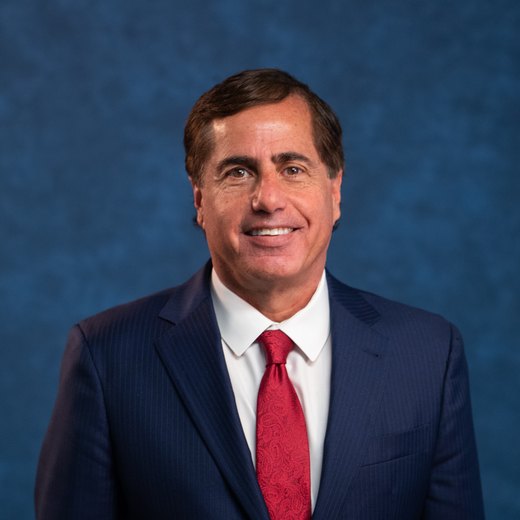
Don Haddad
Don advises the Alliance on educational policy, systems administration, and teaching and learning.
Don Haddad, Ed.D., is the Superintendent Emeritus of the St. Vrain Valley School District, which he led from 2009 to 2025. Dr. Haddad championed the P-TECH model, spreading it to four high schools and speaking widely about the way it transformed students’ lives. Under his leadership, the overall graduation rate for students in poverty rose from 55% to 98%, while the district upheld among the most demanding graduation requirements in the state — and many of those students are earning associate degrees with their high school diplomas.
In addition, the district won numerous national grants and awards during his tenure, including an Invest in Innovation Grant for $3.6 million and a Race to the Top Grant for $16.8 million.
Before becoming superintendent, he served in several school districts while working in various teaching, coaching, and administrative positions at every level, PK–12. In St. Vrain he held the positions of Principal at Niwot High School, Executive Director of Secondary Instruction, Assistant Superintendent of Learning Services, and Deputy Superintendent.
Dr. Haddad was named the 2013 Superintendent of the Year by the National Association of School Superintendents (NASS), and has served as the Chair of the NASS Executive Committee. In addition, he was one of 100 superintendents nationwide invited to participate in the Future Ready Superintendent Summit at the White House in November 2014 and was selected as one of the 16 “2015 Leaders to Learn From” by Education Week. Currently he participates in numerous professional organizations and educationally focused activities.
 Advisor
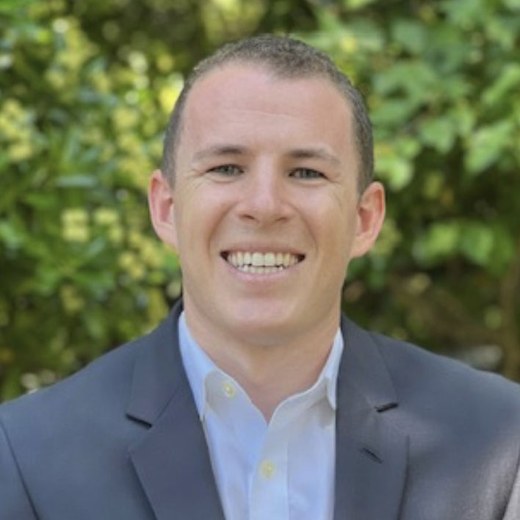
Jared Giles
Jared advises the Alliance on strategic operations, education technology, and economic mobility.
Jared Giles is the founder and principal of SquareOne, a consulting firm building the systems connecting public education to economic opportunity, from career pathway and program design to employer engagement and talent pipeline development. Through SquareOne, he has partnered with organizations including Amazon, Work ED, CenterState CEO, NYC Public Schools, CUNY, and the New York City Economic Development Corporation. Jared is the architect of the Economic Mobility Dashboard, a real-time tool tracking New York City’s education-to-employment pipeline. He also serves as Vice President of STEAM Engine, which is working to replicate the Brooklyn STEAM Center’s industry-embedded career education model across New York City’s five boroughs. He writes The SQ1 Pivot, a newsletter on data, policy, and educational models that drive economic mobility.
Previously, Jared was VP of Corporate Social Responsibility at the Partnership for New York City, where he led a network of 200 executive members focused on developing career pathway initiatives for thousands of high school and college students. He also served as Director of Workforce Development Initiatives at the Brooklyn Navy Yard Development Corporation.
Jared began his career as a product manager and director of operations at Interapt, a Louisville-based software company, where he led mobile and web development teams while building workforce training programs in Eastern Kentucky to prepare local residents for careers in software development.
Jared holds a B.S. in Information Science from the University of North Carolina at Chapel Hill and an M.A. in Arts Politics from New York University. His work is guided by a single question: “Is it good for kids?”
 Advisor
Danny Auerbach
Danny advises the Alliance on strategic partnerships, digital infrastructure, and business modeling.
Danny brings experience across education, technology, workforce development, and organizational strategy, focusing on turning emerging technologies into scalable impact. At Kiddom, he leads strategic partnerships with K–12 school districts, working at the intersection of customer success, growth, and district strategy to help schools implement and scale technology.
Earlier in his career, Danny was a management consultant at Baker Tilly, advising organizations across more than 10 countries on strategy, organizational transformation, and workforce initiatives, including upskilling and reskilling. He went on to teach English and math at Success Academy, where his students achieved results in the top 10% of the network in both subjects.
Danny next served as Director of Special Projects at DREAM (formerly Harlem RBI), where he led the rollout of an AI-powered learning program that increased staff productivity by 60% and helped scale AI strategy across seven schools. He later worked with KIPP Public Schools, designing AI-powered tools, training, and strategies for educators serving more than 120,000 students. He has also worked across startups from pre-seed through Series F, giving him experience navigating organizations from early-stage growth through scale.
Having traveled to 50+ countries and worked across more than 10, Danny brings a global perspective to strategy, partnerships, and organizational transformation. He holds an MBA from Duke University’s Fuqua School of Business and is an Ironman triathlete.
Fifteen years of proof
From a single Brooklyn classroom to a model spanning 11 states and 28 countries — the story of P-TECH.
A radical idea, made practical
In 2010, New York City leaders and IBM asked a simple question: what if high school didn't end at 12th grade — and didn't end without a job in sight? The answer was a school combining grades 9–14, a no-cost associate degree, and an industry partner invested in every student.
P-TECH opened in Brooklyn in September 2011, enrolling its first class through open admission — no tests, no screens. Two years later, President Obama told the nation about it in his State of the Union address, urging that every American student deserves the same opportunity.
The model's power has always been its bipartisan appeal: championed by Democratic and Republican leaders alike — from President Obama to Governor Larry Hogan in Maryland and Governor Greg Abbott in Texas — and studied by heads of state from Australia to Ireland.
Deep Background on the Origin of P-TECH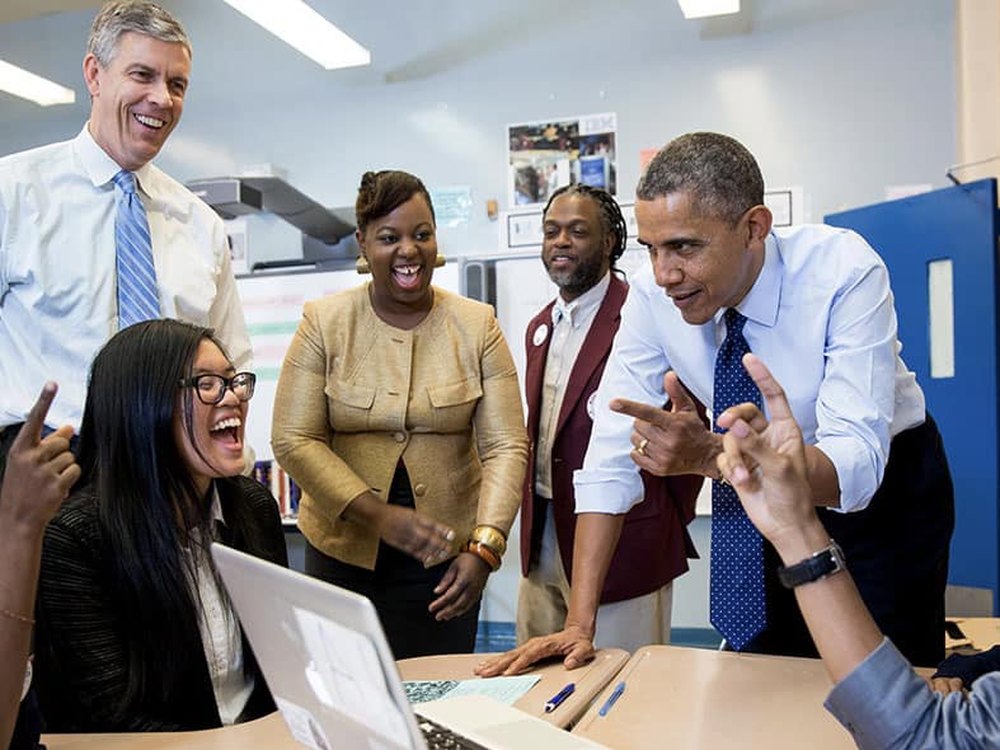
How the movement grew
We need to give every American student opportunities like this.President Barack Obama — State of the Union, 2013
The Origin of P-TECH
How a conversation between a mayor and a CEO became a school model spanning 11 states and 28 countries.
The P-TECH model grew out of conversations in 2010 among Mayor Michael Bloomberg and IBM CEO Sam Palmisano. As the city recovered from the Great Recession, they discussed the need to connect public school students to careers in technology and engineering. Palmisano asked Stanley Litow, head of IBM’s corporate foundation, to develop a solution.
Litow believed traditional school-business partnerships were insufficient because a high school diploma alone no longer led to sustainable careers. Instead, he proposed a new model that would integrate high school, community college, and industry into a seamless six-year pathway.
Students would earn both a high school diploma and an associate degree while receiving mentoring, paid internships, and workplace experiences aligned with employer needs. The goal was to prepare graduates for long-term careers rather than a single entry-level job.
Working with City University of New York (CUNY) Chancellor Matt Goldstein, Litow also sought to address poor college readiness, high remediation rates, and low community college graduation rates. IBM agreed to modify its hiring practices so graduates with associate degrees would have access to career opportunities. From the outset, Litow envisioned a model that could expand beyond a single school, creating a scalable partnership among education, higher education, and industry.
From concept to classroom in two months
The P-TECH model moved from concept to reality in two months, when Bloomberg announced on television a partnership among New York City, IBM, and the City University of New York to create the nation’s first grades 9–14 school. With just months to prepare, leaders agreed on a shared governance structure, a curriculum aligned with workforce needs, and a commitment to keeping the program affordable, scalable, and compatible with existing public education systems and funding.
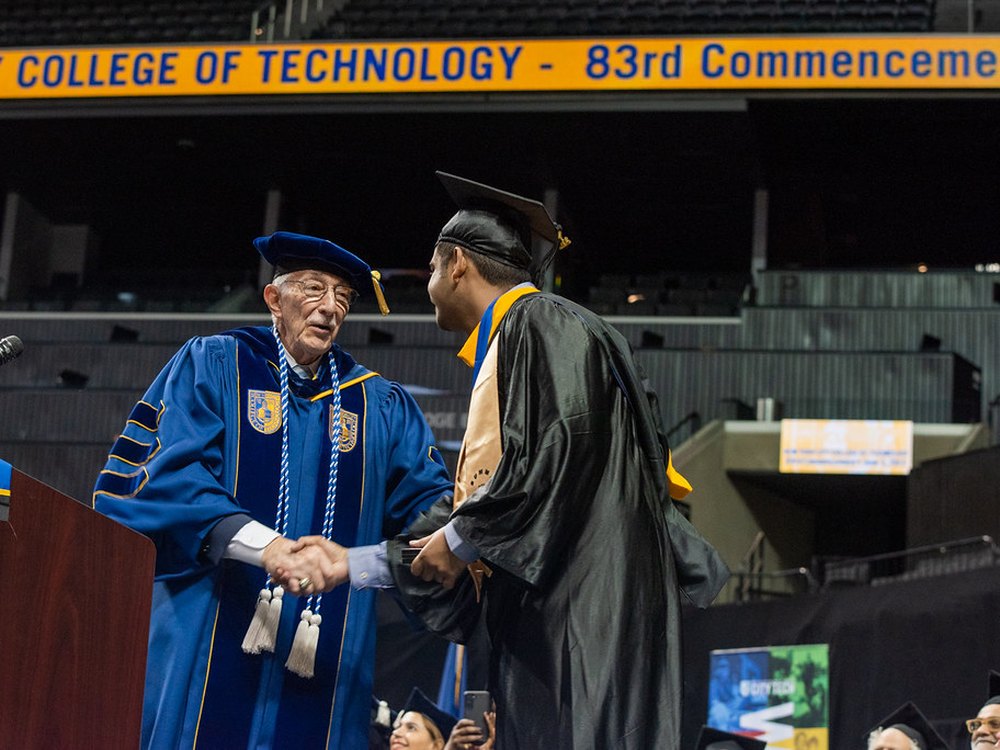
The first P-TECH school opened in the former Paul Robeson High School in Brooklyn’s Crown Heights, a decision that sparked community concerns because of the neighborhood’s high crime rate and previous school closures. Planners engaged local leaders, educators, parents, and community organizations, emphasizing that P-TECH would have open admissions, serve neighborhood students, provide mentoring, paid internships, and a free associate degree from the New York City College of Technology, and prepare graduates for both four-year colleges and careers. Rashid F. Davis was selected as the founding principal.
By addressing concerns about equity, access, and cost while building broad stakeholder support, the founders established a model designed to expand well beyond a single school.
The first 103 students
None of the first 103 students had been accepted by their 12 first-choice high schools in the citywide matching process; many were also rejected by their second dozen choices. This group of 14-year-olds, all students of color, 80% of whom came from families in poverty, had not been dreaming of STEM careers for years. Half of the students started 9th grade with math and literacy scores below grade level. As they climbed the stairs of the 106-year-old Beaux Arts building across from a public housing project, they might not have been expected to thrive, let alone have their life stories connected to addressing some of the thorniest problems of American education. Soon, they excelled.
Beyond New York
Bloomberg shared his enthusiasm about P-TECH with Rahm Emanuel, the mayor of Chicago at the time. The Sarah E. Goode STEM Academy opened in 2012, enrolling 463 students by its second year, and became the starting point for the national expansion of P-TECH beyond New York.
In his 2013 State of the Union address, then President Obama said of P-TECH, “We need to give every American student opportunities like this.” He later visited the school, as did the prime minister of Australia, several U.S. Secretaries of Education, and New York Gov. Kathy Hochul. The P-TECH model was further elevated by IBM CEO Ginni Rometty, who spoke about P-TECH frequently at international tech conferences, the National Governor’s Association, and national gatherings with students at her side, while encouraging senior executives to introduce the model to government leaders. In 2016, Harvard Business School professor Rosabeth Moss Kanter completed a three-part case study of the model. By 2018, the State University of New York embedded the program in all 30 of its community colleges.
Today
In 2026, the inaugural Brooklyn P-TECH in Crown Heights was ranked as the highest performing open admission high school among over 500 public high schools across New York State. Today, the model has spread across 11 U.S. states and 28 countries with over 600 schools. Its success is measured by high school graduation rates, work-based learning activities, college credit accumulation, degree completion, and job placement.
Every student on the planet should have an educational opportunity like P-TECH.
The evidence behind the model
P-TECH is one of the most rigorously studied school designs in the country. Here is what independent researchers have found.
Findings from MDRC's independent evaluation of seven New York City P-TECH 9–14 schools and from the Colorado Department of Education's statewide report using National Student Clearinghouse data. MDRC notes variation in implementation across schools — a reason the Alliance's quality and coaching work matters.
Read the research
P-TECH 9–14: Pathways to Success
The independent evaluation of seven New York City P-TECH schools — internships, college coursework, and degree completion.
Read the evaluationTREP & P-TECH statewide report
Colorado's statewide outcomes for P-TECH graduates, including continuation to four-year universities.
Read the reportThe Alliance national brief
The Alliance is building a national directory and shared metrics — with an annual national research brief to follow.
Get notifiedFind your path
Whether you lead a state, a company, a foundation, or a classroom — there is a role for you in the P-TECH network.
States & Districts
Launch or expand P-TECH pathways with hands-on Alliance support.
Learn moreEmployers
Offer mentors, worksite visits, and paid internships — and build your future workforce.
Learn moreFunders
Invest in national infrastructure with a fifteen-year evidence base.
Learn moreEducators & Alumni
Join the community of practice — or assist the students following in your footsteps.
Learn moreSign up for our newsletter
Be first to hear news from the Alliance and stories from across the network.